How to Tune Your Bow for Maximum Accuracy
1. Start With a Proper Setup
Before tuning, make sure the bow fits you:
✔ Draw Length:
Too long → leaning back, inconsistent anchor
Too short → cramped form, low power
✔ Draw Weight:
Should be comfortable enough to practice without fatigue (accuracy > power)
✔ Arrow Spine (Stiffness):
- Too weak → arrows kick left (RH) / right (LH)
- Too stiff → opposite reaction
Use a spine chart for your bow weight & draw length.
🔧 2. Center Shot & Rest Alignment
Goal: Arrow leaves the bow straight.
Compound:
- Adjust the arrow rest so the arrow sits inline with the center of the string.
- Most start points:
- Rest center shot: ~13/16″ from riser for most compounds.
Recurve:
- Use a plunger/berger button
- Arrow should sit slightly outside center line (for right-handed)
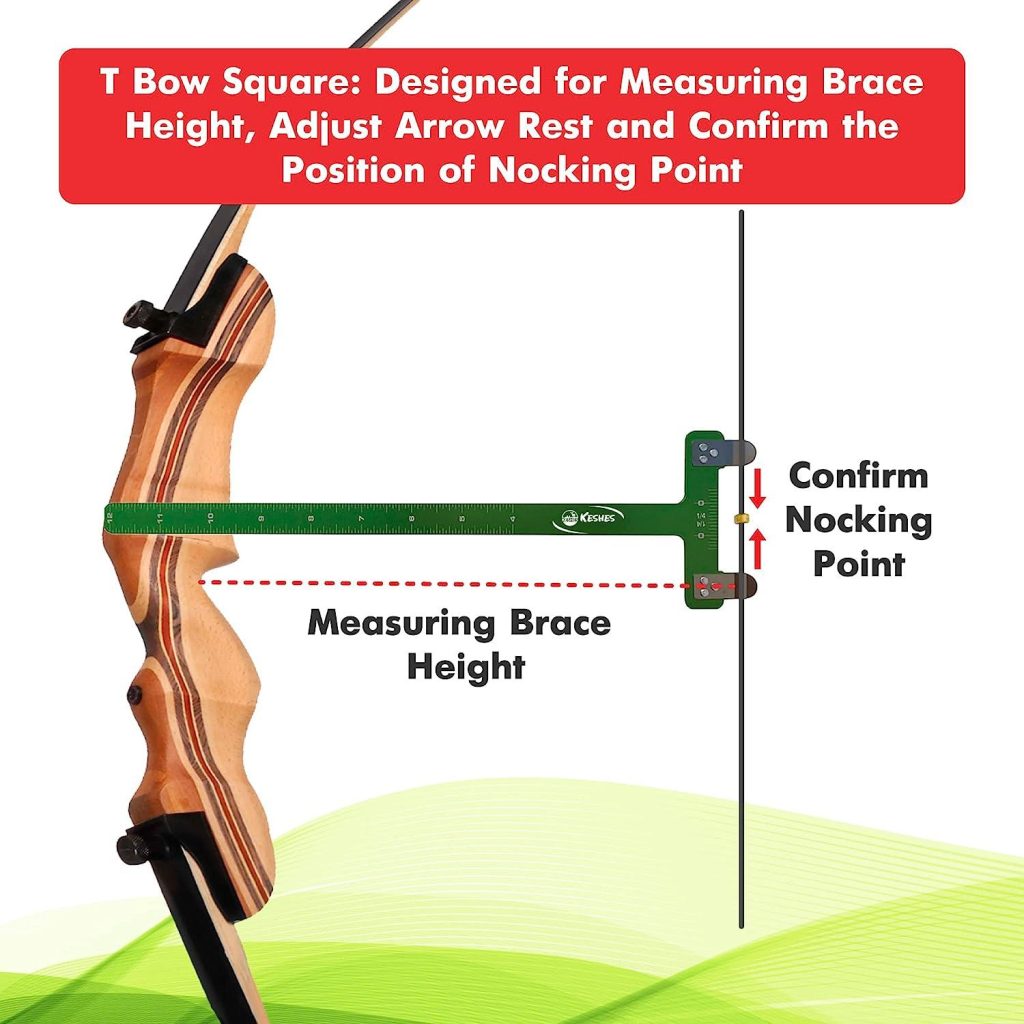
🏹 3. Nocking Point / D-Loop Height
Recurve Starting Point:
- Nocking point ~ 3–6 mm above square
Compound:
- D-loop close to level, slightly high is okay
Incorrect height causes porpoising (vertical arrow oscillation)
.
🧪 4. Paper Tuning (Compound / Barebow)
Shoot through paper at ~2 meters and check tears:
| Tear Pattern | Meaning | Fix |
|---|---|---|
| High tear | nock too high | lower D-loop/nock |
| Low tear | nock too low | raise D-loop/nock |
| Left tear (RH shooter) | arrow too stiff / rest too left | move rest right |
| Right tear (RH shooter) | arrow too weak / rest too right | move rest left |
Do small adjustments → retest.
⚙️ 5. Walk Back Tuning (Compound)
Purpose: fine-tune center shot.
How:
- Sight at 20m → shoot group
- Without moving sight, shoot at 30m/40m
- Check vertical string:
If groups form a slanted line:
- Left slant: move rest slightly right
- Right slant: move rest slightly left
Goal = straight vertical line under bullseye
🔩 6. Bare Shaft Tuning (Recurve / Compound)
Bare shafts expose tuning issues fast.
How:
- Shoot 3 fletched + 2 bare shafts at 15–20m
Results:
- Bare left (RH): arrow too stiff / plunger too hard
- Bare right (RH): arrow too weak / plunger too soft
- Bare high/low: nocking height adjustment
Goal = bare shafts land with fletched shafts.
🎤 7. Stabilization & Grip Fix
After mechanical tuning, shoot consistency matters:
Grip:
- Neutral, low torque grip = ★ huge accuracy boost
- Pressure should be on thumb pad, not fingers
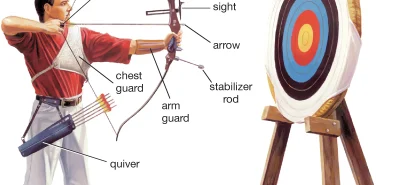
Stabilizers:
- Add front/back weight to reduce pin float
- Balance should hold steady on target, not dive or roll
🔍 8. Broadhead Tuning (For Hunters)
If using broadheads:
- Sight-in with field points
- Shoot broadheads
- Use small rest micro-adjustments to bring them together
🧽 9. Maintain & Check Regularly
- Wax string regularly
- Check limb bolts & screws
- Replace worn D-loop
- Inspect arrows for cracks
- Re-check tune after string change
🏁 Signs Your Bow is Properly Tuned
✔ Arrows group tight at distance
✔ Bare shafts hit with fletched
✔ No visible fishtail in flight
✔ Quiet shot with minimal vibration
✔ Easy to hold steady