What is Brace Height & Why It Matters in Archery?
Brace height is one of the fundamental tuning parameters of a bow, yet it remains misunderstood by many new archers. Whether you are shooting for recreation, competition, or bowhunting, understanding brace height can significantly influence bow performance, shot consistency, and shooting comfort.
This article explains the concept of brace height, why it is important, how it differs across bow types, and what archers should consider when tuning their equipment.
Defining Brace Height
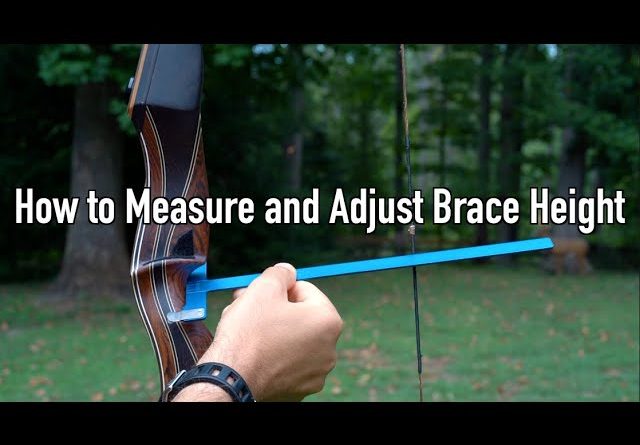
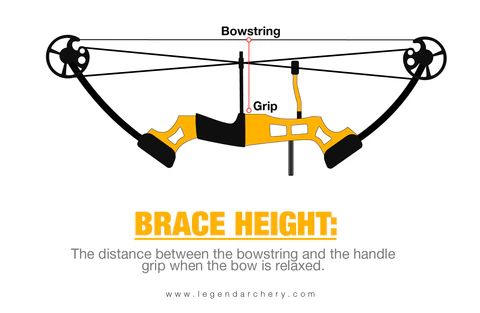
Brace height refers to the distance between the bowstring and the deepest part of the bow grip (often called the pivot point) when the bow is at rest. The measurement is taken using a bow square (T-square) and is expressed in inches.
Despite being a static measurement, brace height impacts dynamic factors such as power stroke, speed, noise, and shooter forgiveness.
Brace height applies to all modern bow categories, including:
- Recurve Bows
- Compound Bows
- Traditional Longbows
The Functional Importance of Brace Height
Brace height influences several key performance attributes. The most notable are:
1. Power Stroke and Arrow Speed
Brace height directly affects power stroke, the distance the string travels during the shot cycle.
- Lower brace height → longer power stroke → increased energy transfer → higher arrow speed
- Higher brace height → shorter power stroke → reduced energy transfer → lower arrow speed
While speed is attractive to many archers, it must be balanced against stability and consistency.
For optimal speed tuning, appropriate arrows are essential. Explore Arrow Sets suitable for different draw weights and shooting styles.
2. Forgiveness and Shooting Accuracy
Forgiveness refers to how tolerant a bow is to small variations in shooting form. Brace height plays a critical role here.
- Higher brace height results in a more forgiving setup because the arrow remains on the string for a shorter duration.
- Lower brace height is less forgiving because the shooter’s form influences the arrow longer.
For beginners or target shooters focused on clean execution rather than raw speed, slightly higher brace heights are generally preferred.
Stability can also be improved using Stabilizers to reduce micro-movement during the shot.
3. Vibration, Noise, and Shooting Comfort
Incorrect brace height can produce excess vibration, noise, and hand shock. When brace height is tuned properly, most bows exhibit:
- A quieter shot
- Reduced vibration
- Smoother feedback through the riser
These elements are particularly important in competitive environments where precision matters.
4. Handling String Contact and Safety
One commonly observed issue among beginners is string contact with the bow arm, often called “string slap.” Low brace heights can increase the likelihood of string slap, which can be both painful and disruptive.
For early-stage practice, using protective gear such as Armguards and Finger Tabs (for recurve shooting) is highly advisable.
Typical Brace Height Ranges by Bow Type
While brace height varies by model and manufacturer, the following ranges are generally accepted:
| Bow Type | Typical Brace Height Range |
|---|---|
| Recurve Bow | 7.5″ – 9.25″ |
| Compound Bow | 5.5″ – 8.0″ |
| Longbow | 7.5″ – 8.5″ |
It is recommended to verify manufacturer specifications when selecting a bow. Specifications can be reviewed on:
Adjusting Brace Height: Recurve vs. Compound
Recurve Bows
Recurve brace height is adjustable through string manipulation:
- Increase brace height: add twists (shortens the string)
- Decrease brace height: remove twists (lengthens the string)
Replacement strings and maintenance products are available under Bowstrings.
Periodic waxing also helps maintain string integrity and prevent stretching.
Compound Bows
In compound systems, brace height is largely dictated by the cam design and is not generally adjustable. Any significant deviation from the manufacturer’s specification may indicate:
- Cable stretch
- String wear
- Incorrect string length
In such cases, consultation with a bow technician is recommended. Accessories like Release Aids can further improve shooting consistency for compound archers.
Professional Coaching Recommendations
Experienced coaches emphasize the following best practices regarding brace height:
✔ Stay Within Manufacturer Specifications
Exceeding tolerances can reduce performance and may damage equipment.
✔ Prioritize Consistency Over Speed
Forgiveness and repeatability contribute more to long-term progression than raw arrow velocity.
✔ Evaluate Using Sound and Feel
A well-tuned brace height yields quiet, smooth shots with minimal hand shock.
✔ Check Brace Height Periodically
Strings settle and stretch over time—especially in humid environments—so periodic checks are essential.
✔ Use Appropriate Accessories
Armguards, finger tabs, or release aids improve shooting mechanics and comfort.
Explore coaching-approved gear via Archery Accessories.
Conclusion
Brace height may appear to be a minor specification, but it is central to tuning, comfort, and performance. For beginners, understanding brace height accelerates learning and minimizes frustration. For experienced archers, small brace height adjustments offer a fine-tuning mechanism that enhances precision and control.
Whether you are selecting your first bow or optimizing a competitive setup, paying attention to brace height is a practical and worthwhile investment in your development as an archer.
Explore Archery Equipment at Bank of Archery
Enhance your setup with high-quality equipment:
✔ Recurve Bows:
https://bankofarchery.com/product-category/recurve-bow/
✔ Compound Bows:
https://bankofarchery.com/product-category/compound-bow/
✔ Bowstrings & Tuning Essentials:
https://bankofarchery.com/product-category/for-the-bow/strings/
✔ Arrows & Arrow Sets:
https://bankofarchery.com/product-category/arrows/
✔ Stabilizers & Vibration Control:
https://bankofarchery.com/product-category/recurve-bow/stabilisers-set/
✔ Armguards, Release Aids & More:
https://bankofarchery.com/product-category/for-the-archer/