How to Sight in a Recurve/Compound Bow Step-by-Step
Whether you’re shooting Olympic recurve, bowhunting with a compound, or practicing barebow, sighting in your bow is one of the most important steps toward becoming an accurate and consistent archer. A properly sighted bow means tighter groups, less frustration, and more confidence on the shooting line.
In this guide, we’ll break down how to sight in a recurve and compound bow step-by-step, common mistakes beginners make, and pro tips from coaches to help you dial in faster.
What Does “Sighting In” Actually Mean?
“Sighting in” refers to adjusting your bow sight so that your arrows impact the target exactly where your sight pin or aperture is aimed.
When correctly sighted:
✔ Your arrows group consistently
✔ You hit center at multiple distances
✔ You reduce left-right and up-down error
For compound shooters, this usually means multiple sight pins (20-60 yards).
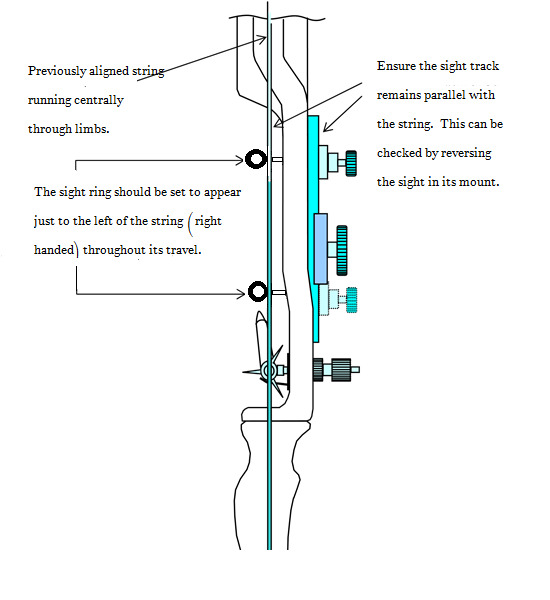
For recurve shooters, it’s usually a single adjustable sight that shifts horizontally and vertically.
Required Equipment for Sighting In
To sight in properly, you’ll need:
- A safe archery range
- Your bow (recurve or compound)
- Properly spined arrows
- Bow sight (single pin for recurve, multi-pin for compound)
- Allen keys / wrench set
- Target face at multiple distances
- Notebook or app for recording adjustments (optional but recommended)
📌 Recommended Read:
👉 What Bow Accessories You Actually Need:
https://bankofarchery.com/bow-accessories-basics/
Step-by-Step: How to Sight In a Recurve Bow
Step 1: Start at 10–15 Meters
The goal at short distance is to establish grouping, not score 10s.
Shoot 3-6 arrows:
- If your arrows are scattered, work on form first
- If your arrows are grouped, move to sight adjustment
Coach Tip:
“Never chase accuracy before consistency. Always adjust sight based on the center of a group, never a single arrow.”
Step 2: Adjust Your Sight Vertically (“Chase the Arrow”)
If arrows hit high, move sight up.
If arrows hit low, move sight down.
It feels backwards at first — but that’s how recurve sights work.
Step 3: Adjust Horizontally
If arrows hit left, move the sight left.
If arrows hit right, move the sight right.
Do small adjustments (1–2 clicks).
Shoot another group to confirm.
Step 4: Move Back to 20–30 Meters
When your bow is on target at 10–15m, move back to 20–30m and re-check:
✔ Groups low? → Move sight down
✔ Groups left? → Move sight left
Continue refining until you hold center consistently.
📌 Want to learn about recurve setup?
Step-by-Step: How to Sight In a Compound Bow
Step 1: Start at 20 Yards
Most compound shooters start at 20 yards since:
- Groups form more clearly
- 20-yard pin becomes your “master reference”
Shoot a clean three-arrow group.
Step 2: Adjust Your 20-Yard Pin
Pin Adjustment Rule for Compound:
👉 Move the pin toward the group
So:
- If arrows hit high, move the pin up
- If arrows hit right, move the pin right
This is opposite of a recurve “chasing arrows,” so remember the distinction!
Step 3: Move to 30, 40, 50+ Yards (Multi-Pin)
Once your 20-yard pin is perfect:
- Sight 30 yards → set your 30 pin
- Sight 40 yards → set your 40 pin
- And so on…
Hunters typically run:
- 3-pin: 20 / 30 / 40 yards
- 5-pin: 20 / 30 / 40 / 50 / 60 yards
Target shooters may use slider sights instead.
📌 Recommended Reading:
Troubleshooting & Common Mistakes
❗ Mistake #1: Adjusting Sight Before Form
If your anchor point, release, or grip changes every shot, sighting is impossible.
Coach Tip:
“Dial in your anchor and grip first. A steady anchor equals repeatable groups.”
❗ Mistake #2: Adjusting After Every Arrow
Never chase a single shot — always adjust based on group center.
Use groups of 3 to 6 arrows before touching the sight.
❗ Mistake #3: Wrong Arrow Spine
Poorly tuned arrows cause:
- Left-right inconsistencies
- High and low fishtailing flights
Use an arrow chart or spine calculator.
📌 Further Reading:
Pro Tips from Coaches for Faster Sighting
✔ Record Sight Marks
Write down your marks for every distance you shoot.
✔ Use Consistent Anchor Point
If your anchor drifts, your arrows drift too.
✔ Grip the Bow Softly
Avoid torque — “relaxed hand is accurate hand.”
✔ Tune Before You Sight
Paper tune, walk-back tune, or bare shaft tune before sighting (for compound).
✔ Check Lighting Conditions
Pins and apertures behave differently in bright vs low light.
✔ Sight in With Your Actual Arrows
Hunting broadheads require separate sighting from field points.
Final Verification Checklist
Before you leave the range, confirm:
☑ Groups are centered at your chosen distances
☑ You recorded sight marks
☑ Arrows, rest, and sight are tight and stable
☑ No left/right drift with distance
☑ No vertical stacking issues
If all are true — congrats, your bow is properly sighted!
Conclusion
Learning how to sight in your bow is an essential foundational skill for any archer. Whether you shoot recurve or compound, the key is:
- Establishing consistent form
- Shooting groups
- Making small sight adjustments
- Progressing through distances
Once dialed in, you’ll shoot more confidently and score higher — whether on a field course, hunting ground, or tournament line.
Want to Learn More?
If you’re serious about archery improvement, check out related resources:
➡ Beginner Guides
https://bankofarchery.com/archery-beginner-guides/
➡ Equipment Buying Guides
https://bankofarchery.com/archery-equipment-reviews/
➡ Tuning & Maintenance
https://bankofarchery.com/bow-tuning-basics/